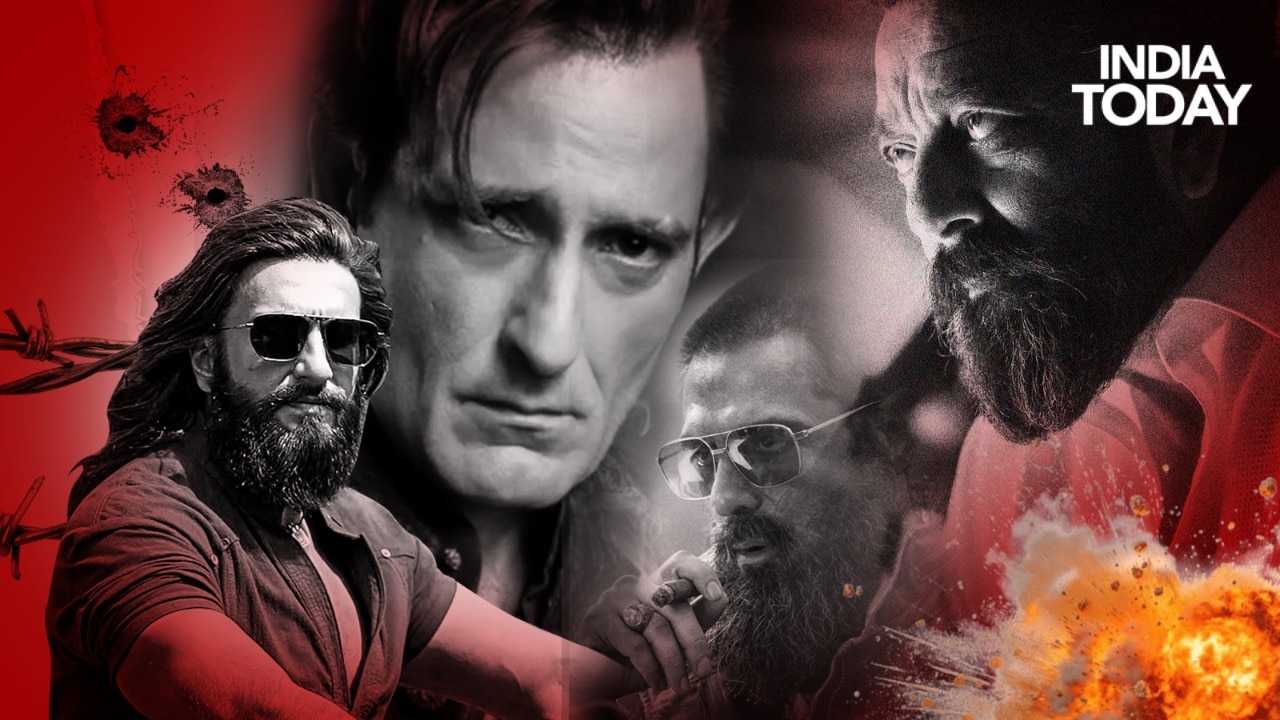
Real Faces of Dhurandhar: Who Inspired Ranveer, Madhavan & Akshay's Roles?
The cinematic landscape often draws inspiration from the gritty, untold stories of our world. Such is the case with the highly anticipated film Dhurandhar, a movie that has captivated audiences and sparked a crucial question across social media and dinner tables: Is Dhurandhar A Real Story? While the film frames a thrilling intelligence-versus-terror narrative, the truth, as often happens, is far more intricate and compelling, weaving together the clandestine world of spies with significant national security vulnerabilities and policy decisions.
Dhurandhar thrusts viewers into India's covert battle against fake currency, painting a picture of high-stakes espionage and underworld confrontations. Yet, beneath the dramatized surface lie layers of real-life inspiration, from the enigmatic figures who shaped India's intelligence apparatus to the unsettling realities of systemic compromises that once threatened the nation's economic stability. Let's delve into the real-life inspirations behind the film's most compelling characters and the broader scandal that forms its backdrop.
Decoding Dhurandhar: The Inspiration Behind the Characters
One of the film's undeniable draws is its cast, with Ranveer Singh, R Madhavan, and Akshay Khanna embodying characters that resonate deeply with real individuals and archetypes. Their performances bring to life the shadowy world of intelligence operations and organized crime, prompting many to wonder about their real-world counterparts.
R Madhavan's Ajay Sanyal: The Shadow of a National Security Legend
R Madhavan's portrayal of Ajay Sanyal, the astute and unyielding Director of the Intelligence Bureau, has been widely recognized as drawing inspiration from none other than India's current National Security Advisor, Ajit Doval. Doval's legendary career, marked by decades in intelligence, including extensive undercover operations in Pakistan, has earned him the moniker "India's James Bond."
Doval is renowned for his "offensive defence" doctrine, a strategic approach that advocates confronting threats at their source rather than waiting for them to materialize within borders. His proactive stance, sharp intellect, and unwavering resolve are characteristics undoubtedly mirrored in Madhavan's Sanyal, who orchestrates complex intelligence maneuvers to safeguard national interests. The character serves as a poignant reminder of the relentless dedication required at the highest echelons of national security, where decisions carry immense weight and consequences.
Akshay Khanna's Rehman Dakait: The Karachi Underworld Unveiled
Akshay Khanna steps into the menacing shoes of Rehman Dakait, a formidable underworld don from Karachi. This character finds its real-life parallel in Abdul Rehman Baloch, more famously known as Rehman Dakait, a notorious figure who once commanded significant power in Karachi's Lyari gang wars. The Lyari district has historically been a hotbed of gang activity, extortion, and violence, with its kingpins wielding influence akin to local warlords.
Rehman Dakait’s story is one of a rise from obscurity to becoming a feared name, controlling vast criminal networks. His character in Dhurandhar likely reflects the brutal realities of urban gang warfare and the complex socio-political dynamics that allow such figures to thrive. For intelligence agencies, infiltrating such networks is often crucial, leveraging existing rivalries and power structures to gather information or disrupt hostile operations, making Dakait a significant piece in the film's intricate puzzle.
Ranveer Singh's Hamza Ali Mazar: The Enigma of the Undercover Spy
Perhaps the most intriguing and shrouded in mystery is Ranveer Singh's character, Hamza Ali Mazar. Portrayed as an undercover Indian spy who infiltrates Karachi's gang wars and steadily climbs the ranks of the formidable Lyari gang, Hamza's inspiration remains officially "unknown." This lack of a specific, named individual is not surprising, given the highly secretive nature of deep-cover operations.
The character of Hamza Ali Mazar likely embodies the courage, resilience, and psychological fortitude of numerous unsung heroes who operate in the shadows. These agents often live double lives for years, facing immense personal risk and moral dilemmas. Their identities are carefully guarded, and their sacrifices often go unacknowledged publicly. Hamza's story, therefore, could be a composite of multiple real-life agents or an archetype representing the sheer grit and dedication required to play the "long game" in hostile territories. His role highlights the human cost and profound commitment involved in intelligence work, pushing the boundaries of identity and loyalty for the sake of national security.
Beyond Borders: The Uncomfortable Truth of India's Fake Currency Battle
While the character inspirations provide a human face to the narrative, the broader context of India's fake currency problem introduces a darker, more complex layer to the question, Is Dhurandhar A Real Story? The film’s plot, focusing on external threats, contrasts sharply with real-world revelations that point to significant internal vulnerabilities.
Investigative files, CBI documents, and parliamentary records reveal that some of the most critical weaknesses in India’s currency security system emerged not from cross-border adversaries, but from within its own decision-making apparatus. These records highlight a series of policy decisions and administrative compromises that, according to investigators, left India’s currency system vulnerable for years, ripe for exploitation by hostile counterfeit networks.
The origins of this controversy can be traced back to New Delhi in 2004, during the tenure of P Chidambaram as Finance Minister in the first United Progressive Alliance (UPA) government. In a pivotal decision in July 2004, his ministry authorized the Reserve Bank of India (RBI) to enter into exclusivity agreements for crucial banknote security features. By September 2004, a contract was signed, granting the British firm De La Rue – a company with historical ties to printing Pakistani currency – an exclusive deal to supply a vital colour-shift security thread for Indian banknotes. This thread, designed to change colour when viewed from different angles, was a key anti-counterfeiting measure.
However, subsequent CBI findings and internal file notings immediately flagged two major structural issues. Firstly, De La Rue reportedly did not possess a granted patent for this specific technology when the monopoly agreement was inked. Their patent application was filed in June 2004, published in 2009, and only granted in 2011, raising serious questions about the legal basis for granting an exclusive contract on proprietary technology. Secondly, the contract allegedly lacked stringent exit clauses, effectively locking India into a single-supplier arrangement without clear mechanisms to disengage, even if performance or security concerns arose. Despite internal objections from RBI and the Security Printing and Minting Corporation of India Limited (SPMCIL) surfacing as early as 2006-2007 regarding the patent status, the exclusive arrangement continued without competitive bidding, creating a critical national security dependency. For a deeper dive into this scandal, read Is Dhurandhar Real? Unpacking India's De La Rue Fake Currency Scandal.
Dhurandhar's Deep Dive: Fact vs. Fiction in National Security Narratives
Films like Dhurandhar serve as powerful vehicles for exploring complex national security themes, bridging the gap between historical events and public consciousness. While the movie undoubtedly takes artistic liberties for dramatic effect – simplifying timelines, conflating characters, and heightening stakes – its foundation rests on a bedrock of real-world phenomena. The juxtaposition of a shadowy intelligence war with governmental policy missteps underscores a crucial aspect of national security: threats are not always external and overt. Sometimes, the most significant vulnerabilities lie within, exposed by flawed decision-making and a lack of accountability.
The film's exploration of deep-cover agents, the murky world of organized crime, and the constant battle against economic sabotage resonates because these are ongoing realities. Understanding the real inspirations behind the characters and the broader context of the De La Rue scandal helps viewers appreciate the intricate dance between intelligence operations, political accountability, and a nation's economic resilience. It encourages a more nuanced discussion about how national security is maintained, often through unseen sacrifices and sometimes, despite internal challenges. For further exploration of how such events intertwine, see Dhurandhar's Truth: From Political Blunders to Real-Life Spy Infiltrations.
Practical Tip: When engaging with films "inspired by true events," consider researching the actual incidents and people. This enriches the viewing experience by providing a deeper understanding of the real-world complexities that filmmakers navigate, distinguishing between cinematic enhancement and documented facts.
Conclusion
Ultimately, the answer to "Is Dhurandhar A Real Story?" is a resounding yes, but with significant caveats. The film masterfully fictionalizes a blend of compelling real-life inspirations: the strategic brilliance of figures like Ajit Doval, the grim reality of underworld kingpins like Rehman Dakait, and the selfless anonymity of countless undercover agents. Simultaneously, it touches upon the very real and uncomfortable truth of India's past vulnerabilities in currency security, stemming from policy decisions rather than just cross-border threats. Dhurandhar thus serves as more than just entertainment; it's a catalyst for discussion, shedding light on the intricate, often hidden, facets of national security that shape a nation's destiny.